Field note 65 of 74 IN THE KITCHEN
A cabbage, some salt and a jar
The easiest fermented food there is: two ingredients, ten minutes' work, then wait.
Modern Savage
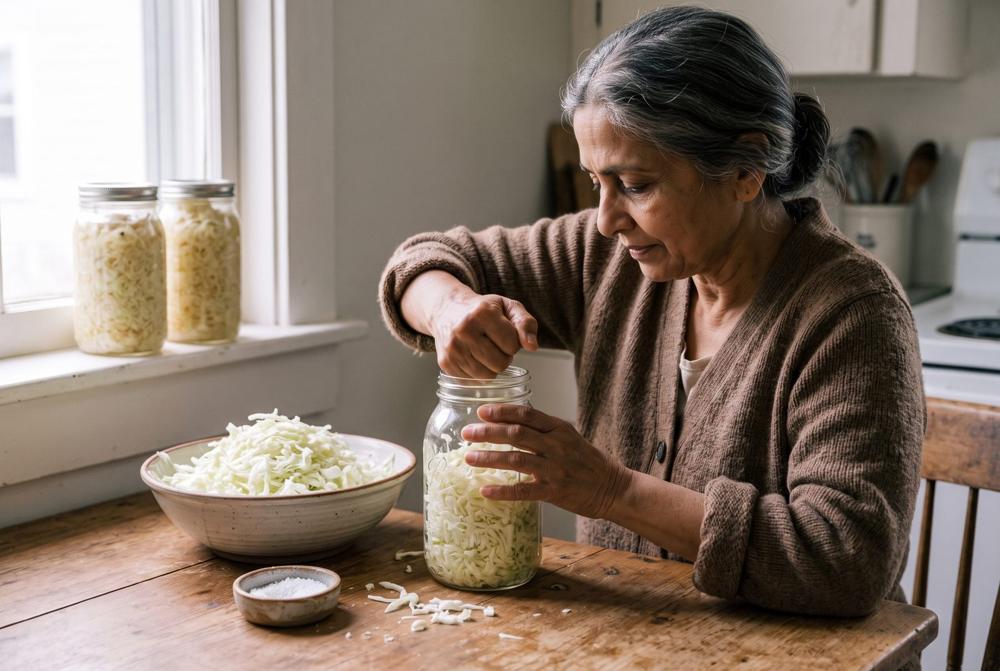
Some of the oldest foods in any kitchen are still alive when you eat them. Sauerkraut is the easiest to make. It needs a cabbage, some salt, a jar and about ten minutes of work. The rest happens on its own.
Salt draws the water out of the cabbage, and bacteria that live naturally on the leaves turn its sugars into lactic acid. That's what makes it sour, and what keeps it.
It costs about the price of a cabbage, it keeps in the fridge once it's ready, and a spoonful next to a plate of sausages, a stew or a cheese sandwich makes the whole thing better.
Try this: sauerkraut, this weekend
Shred one white cabbage finely and weigh it. Keep one outer leaf whole.
Add 2 percent of that weight in salt: 20g for every kilo. Squeeze and massage for about ten minutes, until it's sitting in its own liquid.
Pack it hard into a clean jar until the liquid rises over the top. Lay the whole leaf on top and weigh it down so everything stays under.
Leave it at room temperature, out of the sun, for one to four weeks. Start tasting after a week.
When you like it, lid on and into the fridge.
Check it a couple of times a week and skim off any scum on top. Keep everything under the liquid. If in doubt, throw it out.
There are live cultures in our pouch too, alongside the organs: Bacillus coagulans, a culture that forms spores, which keeps it stable on the shelf.
